
Accurate address data is essential for businesses across the UK. Whether it’s delivering parcels, managing customer records, or running marketing campaigns, even small errors in address information can lead to big problems. Unfortunately, many organisations struggle with poor-quality data due to outdated systems, manual entry errors, and inconsistent formats.
Understanding the most common address data problems—and how to fix them—is key to improving efficiency, reducing costs, and delivering better services. With tools like UPRN and address matching systems, businesses can significantly improve their data quality and reliability.
Why Address Data Quality Matters
Address data is at the core of many business operations. It affects how companies communicate with customers, deliver products, and analyse market trends. When address data is accurate, businesses can operate smoothly and provide a better customer experience.
However, poor data quality can cause serious disruptions. Incorrect addresses can lead to failed deliveries, wasted resources, and unhappy customers. In addition, unreliable data makes it harder for businesses to make informed decisions.
This is why improving address data quality is not just a technical task—it is a business priority. By investing in better data management practices, organisations can avoid costly mistakes and improve overall performance.
Duplicate Address Records and Their Impact
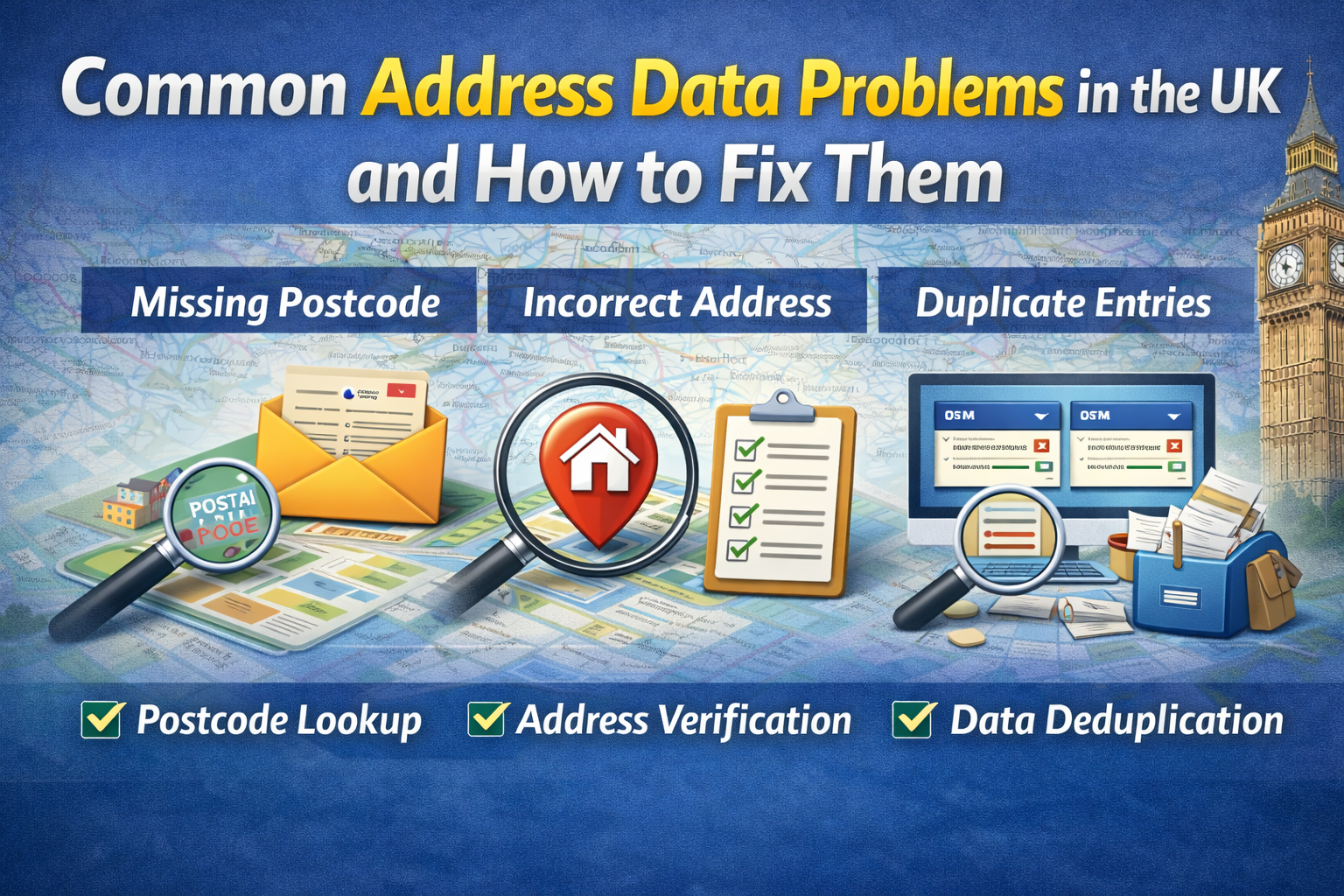
One of the most common problems in UK address data is duplication. This happens when the same address is stored multiple times in a system, often with slight variations. For example, one record may include a flat number while another does not, or the street name may be spelled differently.
Duplicate data creates confusion and inefficiency. It can lead to multiple deliveries being sent to the same address or duplicate communications being sent to customers. This not only increases costs but also damages the customer experience.
To fix this issue, businesses can use address matching tools that identify and merge duplicate records. These tools compare address data across systems and detect similarities, even when the formats are different.
Using a Unique Property Reference Number (UPRN) is also highly effective. Since each property has a unique identifier, duplicates can be easily identified and removed. This helps maintain a clean and organised database.
Missing or Incomplete Address Fields
Another common issue is missing or incomplete address information. This can include missing house numbers, incorrect postcodes, or incomplete street names. Such gaps make it difficult to identify the correct location.
Incomplete data often occurs when customers manually enter their details into forms without proper validation. It can also result from outdated records or poorly designed data systems.
The impact of missing fields is significant. Deliveries may be delayed or fail entirely, and customer records may become unreliable. In some cases, businesses may need to contact customers to confirm details, which wastes time and resources.
To solve this problem, businesses should use address validation and autocomplete tools. These tools ensure that all required fields are completed correctly at the point of entry. They can suggest valid addresses as users type, reducing the chances of incomplete data.
UPRN can also help fill gaps by linking partial addresses to complete and verified records. This ensures that every address in the system is accurate and usable.
Inaccurate and Outdated Address Records
Inaccurate or outdated address data is another major challenge. Over time, addresses can change due to new developments, renaming of streets, or property modifications. If systems are not updated regularly, they may contain incorrect information.
Inaccurate records can lead to serious issues, such as deliveries being sent to the wrong location or services being provided incorrectly. This not only affects efficiency but also harms customer trust.
To fix this, businesses need to regularly update their address data using trusted sources. Address matching tools can compare existing records with official datasets and correct any discrepancies.
UPRN plays a key role here as well. Because a UPRN remains constant even if an address changes, it provides a reliable way to track properties over time. This ensures that records stay accurate, even when address details are updated.
Inconsistent Address Formats Across Systems
In the UK, address formats can vary widely. Some systems may use abbreviations, while others use full names. For example, “Road” may be written as “Rd”, or “Flat 2” may appear as “Apt 2”. These inconsistencies can make it difficult to match and manage data.
Inconsistent formats can cause problems when integrating data from different systems. They can also lead to errors in reporting and analysis.
Address matching tools help standardise data by converting all addresses into a consistent format. This makes it easier to compare, store, and use address information across systems.
Using UPRN further simplifies this process. Instead of relying on text-based addresses, systems can use a unique numeric identifier, eliminating confusion caused by formatting differences.
How UPRN and Address Matching Tools Solve These Problems
UPRN and address matching tools are powerful solutions for improving address data quality in the UK. Together, they provide a reliable and efficient way to manage address information.
Address matching tools clean and validate data by comparing it with official records. They can correct errors, fill in missing fields, and standardise formats. This ensures that all address data is accurate and consistent.
UPRN adds an extra layer of precision. By assigning a unique identifier to each property, it removes ambiguity and makes it easier to link data across systems. Businesses can use UPRNs to track properties, eliminate duplicates, and maintain accurate records over time.
When combined, these tools create a strong foundation for high-quality data. They reduce manual effort, minimise errors, and improve overall efficiency.
Read also: Augmented Reality in Mobile Applications
Conclusion
Addressing data problems are common in the UK, but they can be effectively managed with the right tools and strategies. Issues such as duplicate records, missing fields, inaccurate data, and inconsistent formats can disrupt business operations and reduce efficiency.
By using address matching tools and adopting UPRN, businesses can overcome these challenges. These solutions improve data accuracy, streamline operations, and enhance customer experiences.
In a competitive and data-driven environment, maintaining clean and reliable address data is essential. Investing in modern address management solutions is not just a technical improvement—it is a smart business decision that supports long-term success.


 By
By