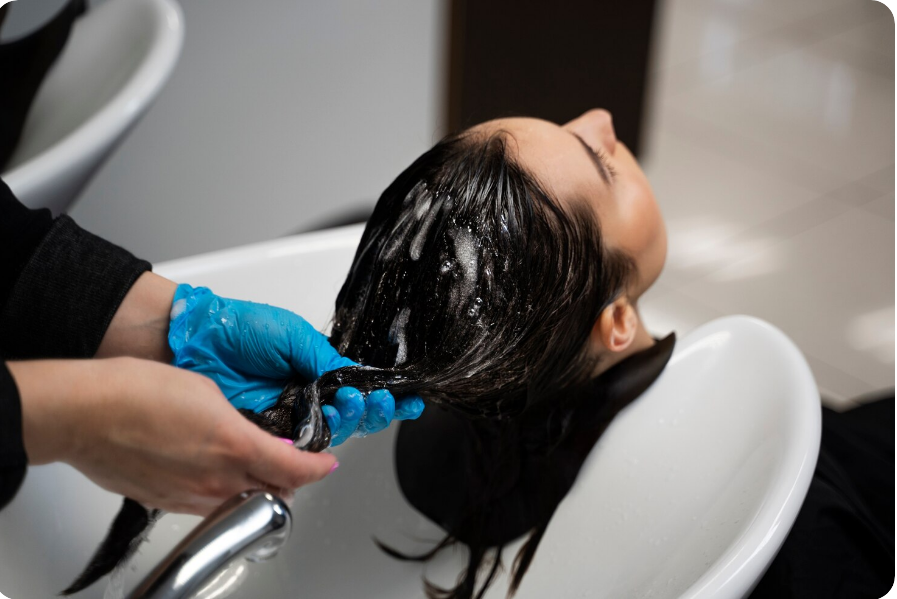

Hair gloss has gotten loose with its meaning in marketing. The word gets used for everything from drugstore shine sprays to professional in-salon color treatments. They aren’t the same thing. A real glossing service is a semi-permanent color treatment that deposits pigment into the cuticle, smooths the hair surface, and shifts tone in ways that go far beyond what a topical product can do. Most people who’ve had a “gloss” at a budget salon have only experienced a fraction of what the service can actually deliver. When done at a higher level, the treatment is customized to the specific hair in the chair, not pulled off a generic shelf.
The bespoke piece is where the technical difference shows up. Two clients walking into the same appointment slot may need completely different gloss formulations. One might want warmth reduction on highlighted blonde. Another might want richness added to dark brown that’s looking flat. A third might want to shine alone without any color shift. Same service category. Three separate formulations were mixed in the bowl. At a luxury salon in Fairborn, a client should expect this level of customization rather than getting whatever the standard mix is that day.
Fairborn has multiple salons in the area. AltaRd Salon LLC is one of the Luxury salon fairborn options on Colonel Glenn Highway, serving the Wright-Patterson and Dayton communities. None of what follows recommends any specific salon. It’s a walkthrough of what a real bespoke gloss treatment entails, where the customization actually happens, and how to tell when a salon is delivering it rather than pretending to.
Hair Gloss Treatment
A gloss is a demi-permanent color treatment formulated with low or no ammonia, processed at a low developer volume (usually 5-10 volume), and designed to deposit color into the cuticle rather than penetrate deeply into the cortex. It refreshes tone, adds shine, smooths the hair shaft, and lasts 4-6 weeks, depending on hair porosity, wash frequency, and at-home product use.
What it doesn’t do: lift natural pigment, lighten previously colored hair, cover gray at high percentages, or make permanent color commitments. So glossing isn’t a substitute for a full-color appointment. It’s a treatment that lives between color appointments, refreshing what’s already there.
The FDA’s overview of hair dye products distinguishes between permanent and semi-permanent categories. Permanent dyes use ammonia to open the cuticle and oxidize pigment inside the cortex. Demi-permanent glosses use much gentler chemistry, deposit color more superficially, and fade gradually with shampooing rather than growing out at the root line.
See also: How to Book the Best Yellowfin Fishing Charter in Costa Rica
Bespoke Gloss Differs From a Standard One
Standard gloss services use a single pre-mixed formula applied to everyone needing the same general result. Bespoke means the stylist is reading the hair sitting in front of them and adjusting the formula to that specific client.
The variables that change in custom mixing. Base color of the natural hair. Existing color residue from previous sessions. The tone the client wants to land on. Porosity of the hair (high-porosity hair grabs pigment faster and can over-process). Damage level (damaged hair processes differently from healthy hair). Whether highlights, balayage, or single-process color is underneath. How recently was the previous color done? What the client washed with that morning.
A bespoke gloss accounts for all of those. A generic one ignores most of them and hopes the standard formula works.
The Tone Correction Conversation
A lot of gloss appointments are really about tone correction. Blondes who’ve gone brassy from sun exposure, hard water, or mineral buildup need cooling tones (blue, violet, ash) to neutralize the warmth. Brunettes whose color has faded to muddy or warm orange need richness and depth restored. Highlighted clients whose foils have started to look uneven need tone unification.
Each of those calls for a different formulation. A blue-violet gloss for brassy blondes. A demi-permanent in a deeper natural shade for faded brunettes. A clear or barely-tinted gloss for blending highlights without changing color materially.
Mixing the wrong tone goes badly. A cool hair tone that needs warmth restored makes it look ashy and lifeless. A warm tone on hair that was already too warm intensifies the problem. The bespoke part correctly diagnoses the tone the hair actually needs.
Clear Versus Tinted Glosses
Clear glosses contain no pigment. They’re for shine, smoothness, and surface conditioning without color change. Useful on clients who don’t need tone correction but want the polished finish a gloss treatment delivers.
Tinted glosses add color in varying intensity. Light-tinted versions are subtle, used for soft tone shifts and depth. Stronger-tinted versions can substantially change the apparent color without the commitment to permanent color. Most bespoke services use tinted formulations because most clients who walk in have a specific tone they want addressed.
The decision between clear and tinted is made during the consultation, after the stylist reads the hair. Skipping this decision and defaulting to clear (or a single tinted formula) is one of the markers that separates salons doing this properly from salons treating glossing as a generic add-on.
Combining Glosses With Bond Builders
Modern bespoke glossing often incorporates bond-builder products (Olaplex, K18, similar products) into the formulation. Bond builders repair the disulfide bonds that get stressed during chemical processing. So when added to a gloss, the hair comes out of the appointment with both color refreshment and structural reinforcement.
The American Academy of Dermatology’s guidance on hair coloring emphasizes that chemical hair services should be balanced with care to protect the hair’s integrity. Adding bond builders to glossing services accomplishes exactly that. The service refreshes the look while actively reinforcing the underlying hair structure.
What Bespoke Pricing Reflects
Bespoke glossing isn’t cheap; the pricing reflects what the service actually involves. Trained stylists who can read hair and mix formulas. Quality product cost (good glossing products run substantially higher than standard gloss products). Time commitment on the calendar that a salon could be using for higher-revenue services. Bond builder integration. Consultation time on the front end.
Salons advertising $35 glosses are running pre-mixed standard formulas with minimal consultation, fast application, and limited customization. Salons running $100+ glosses usually deliver the bespoke version, with everything that comes with it. Both have markets. Confusing them produces predictable disappointment. Knowing which version you’re walking into is the difference between a treatment that delivers and one that just borrows the name.


 By
By