
Most purchases only show what they’re worth a year down the line. The necklace that draws a compliment at every dinner, the ring that never comes off, the exercise trampoline that has quietly turned into a coat hanger in the spare room. This guide compares crystal jewellery, gemstone rings and home trampolines, because the same three questions separate a good buy from a regret. What is it made from? How is it constructed? And what will it look like once the initial buzz has worn off?
Crystal is engineered to sparkle, and copies can’t fake it
A Swarovski necklace is made from cut crystal, and the cutting is the whole point. The facets are angled so light reflects back from several directions at once. Cheap copies have shallower cuts and less depth. They can look great in photos, then lack the sparkle of the real thing the moment you hold them side by side.
Within the first month, you may not see much difference between a quality Swarovski necklace and a cheap copy. After the first summer, you will. The copy starts to lose its coating where sweat and sunscreen have touched it, while the better piece keeps reflecting light. The honest truth is that crystal isn’t an investment. It’s there to give you joy, at a fraction of the price of a gemstone, so nobody should buy a Swarovski necklace with the intention of selling it on.
To keep it bright, wipe it with a soft cloth, avoid perfume and store it away from scratchy chains. A large pendant can overwhelm the neck, so a smaller Swarovski necklace on a delicate chain tends to layer better.
Buying online can be unnerving because you can’t judge the weight or the finish from a photo. Purchase from the manufacturer or an official retailer, ask about the clasp and the chain length, and keep your receipt. A Swarovski necklace is a safe bet when you know the recipient’s taste, and a risky one when you’re unsure of the design. For birthdays and thank-you gifts, it offers a great amount of sparkle for a sensible price.
A gemstone is a long-term commitment, so read the report first
Nothing in this guide takes more nerve to buy than a diamond ring, and nothing rewards patience more.
What the grading terms actually mean
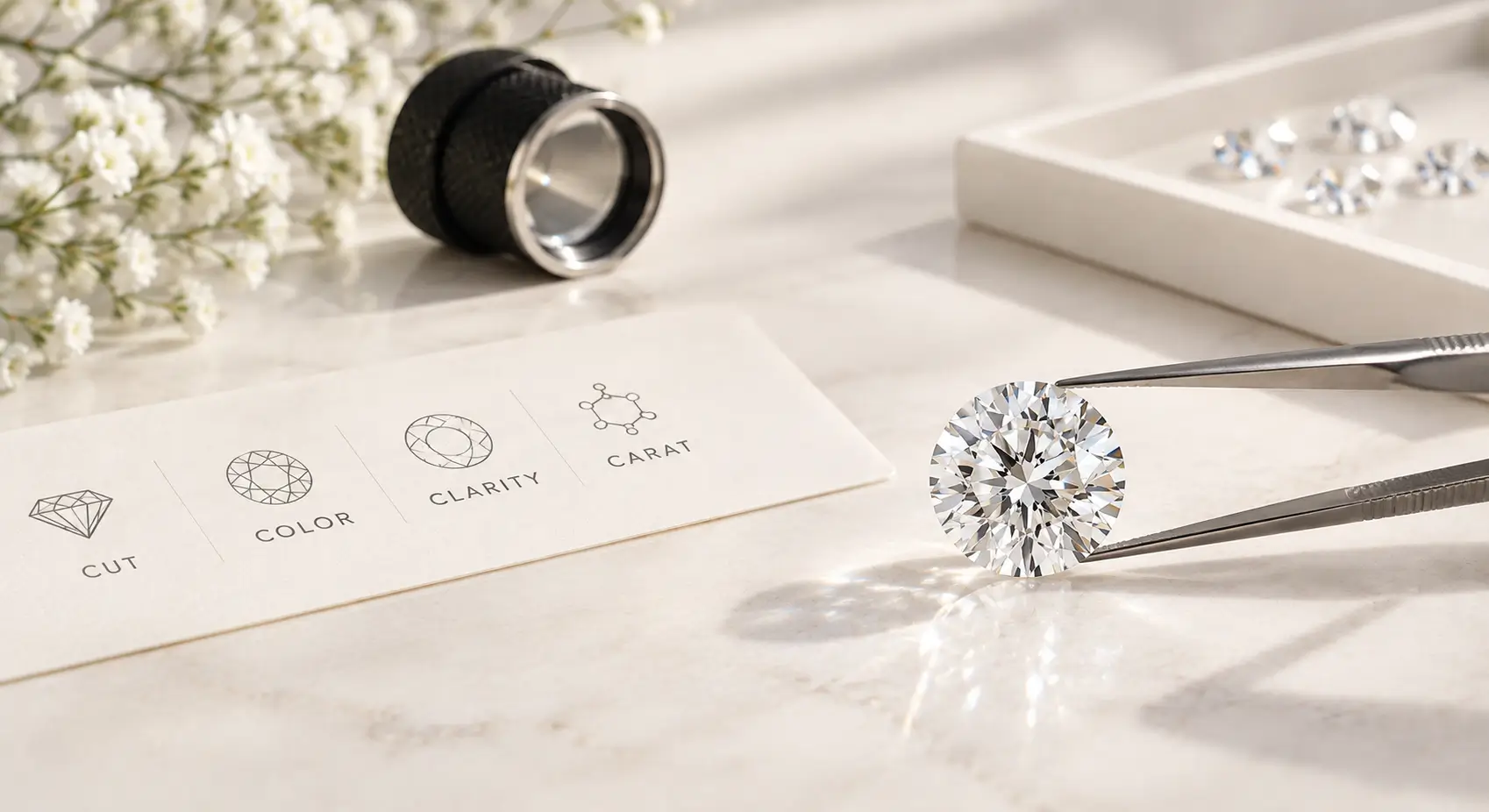
Jewellers grade stones on cut, colour, clarity and carat. Cut decides how much light is returned to the eye, and it often matters more than size. Diamond rings can also differ depending on which lab issued the grading report, so when you’re comparing two pieces, make sure both come with an independent one.
Carat is the weight of the stone, not its width. Two stones of the same carat can look completely different because of their proportions. On a strict budget, a slightly smaller stone with a better cut often works out better. Low-quality diamond rings show their flaws quickly, with a stone that turns cloudy and dull. Diamond rings bought from images alone are the usual source of that disappointment.
Settings, metal and longevity
Choose diamond rings with a claw setting and plenty of light gets through, though it can catch on knitwear. Bezel settings sit lower and suit active hands. Yellow gold, white gold and platinum all wear differently, so ask how each will look after ten years of everyday use.
Many diamond rings need resizing at some point, so ask the seller what they charge. Diamonds are hard, but a knock can still chip one or loosen the claws. A yearly visit to a jeweller is a cheap way to check the stone is secure.
Next to crystal, the difference is clear. A Swarovski necklace is bought for sparkle now, whereas diamond rings are bought for the long term. They can hold value, but there is never a guarantee.
A trampoline has to survive the third month
During the first week, any rebounder feels easy. By the third month, it needs to be the right size for your room and for you.
Large frame or mini?
Large rebounders give you more surface to land on and more room to balance, but they need a permanent area of floor. A mini rebounder is smaller and often foldable, which suits flats and shared rooms. The trade-off is less surface area, so a mini rebounder rewards careful, controlled bouncing.
Ceiling height catches people out. Measure the room, add your height and leave some extra space. A mini rebounder won’t sit as high as a large rebounder, but you’ll still be travelling upwards.
Springs or bungee?
Springs generally feel firmer, while bungee cords feel softer and quieter. If you have neighbours below, the metal springs on a rebounder may be louder than you expect. Check the manufacturer’s weight limit and leave a margin.
A stabiliser bar is a great help for beginners on any rebounder, and non-slip feet matter on a hard floor, where a mini rebounder can slide. A cheap mini rebounder tends to show its flaws after year two: the mat sags, a leg wobbles and something squeaks.
There are limits to what a rebounder can do. It isn’t a medical device and won’t suit everyone. If you have balance issues, joint pain or a recent injury, ask a doctor first. Keep early sessions short and gentle, and choose a mini rebounder with a handlebar to make the first week far less daunting.
See also: Business Strategies for Competitive Markets
Balancing the budget across all three
Birthdays, anniversaries and festive gifts often fall around the same time, so decide what you need to buy first. Diamond rings have little flexibility, so ask the seller to write down the grades of the stone. Then choose your exercise equipment, and buy the Swarovski necklace last.
If you’re buying for a shared household, decide who it’s for. One adult in a small flat will be happy with a mini rebounder, while a family with a garage may prefer a large rebounder. A mini rebounder can be stored behind a door, which matters more than you’d think. Retailers often list a rebounder alongside a small version, which makes the decision look harder than it is.
Before paying, ask how long you can return jewellery and large items, and who covers the return postage. Check whether the warranty includes the frame, springs and mat. For rings, ask for a grading report. For a Swarovski necklace, ask for proof of authenticity.
Key points before the questions
Each item serves a different purpose. A Swarovski necklace is a great way to add sparkle for a sensible price. Diamond rings offer longevity and should come with grading reports. A rebounder is ideal for households with floor space, and a mini rebounder is ideal for those without.
The main things to settle are a set budget for the ring, written down, and the height and floor space of your room. Once the bigger items are clear, the Swarovski necklace can be chosen last, and the choice between a mini rebounder and a rebounder becomes easy. Check the returns policy on everything, because that is where most problems get fixed. Diamond rings then become an informed decision rather than a nervous one.
Frequently asked questions
Is crystal jewellery the same as a diamond?
No. Crystal is a cut glass material prized for its sparkle and price, while diamonds are natural or lab-grown gemstones prized for being hard, rare and graded. Crystal is great for fashion and gifting. If you want something that lasts, choose a graded stone with an independent report.
How do you decide between a large and small trampoline?
Consider the space and the user. Large frames give more room and stability but need a permanent area of floor. Small foldable ones suit small rooms and storage. Check your ceiling height, the manufacturer’s weight limit and whether there’s a stabiliser bar, then choose the one you will actually use.
Can you wear a gemstone ring every day?
Yes, many people do, but it’s best to protect it. A low setting reduces snagging, and the metal should suit everyday wear. Take it off when gripping tightly, using harsh cleaning products or going to the gym, and have a jeweller check the claws once a year to spot any loosening.
How long should you bounce for?
Many people bounce for short periods, often just a few minutes at first. Build up slowly as your balance and comfort improve, and follow the manufacturer’s guidelines. Anyone with a health concern, an injury or balance issues should talk to a doctor first.


 By