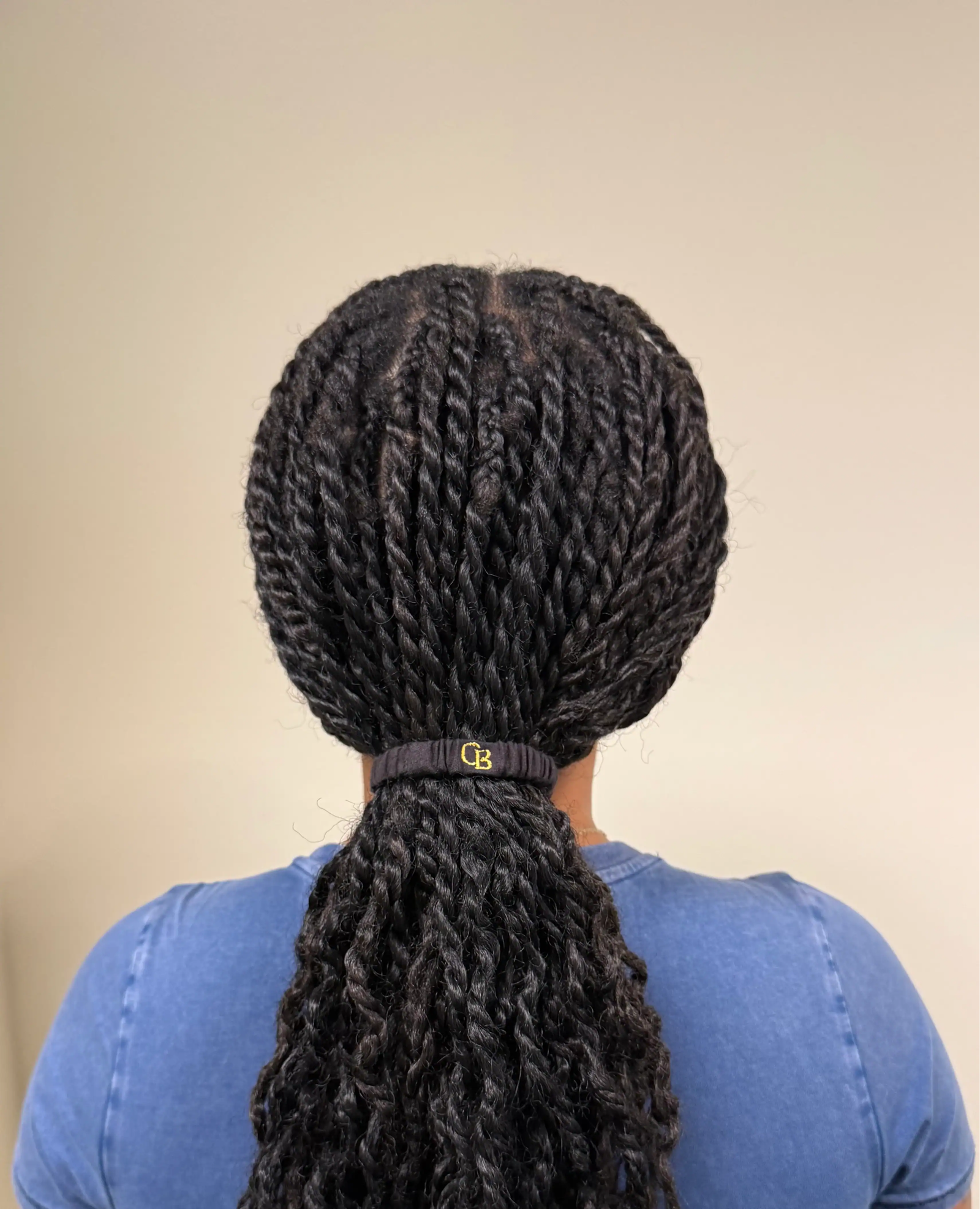

The hair tie might be the most-used object you never think about. It lives on your wrist, in your bag, at the bottom of every drawer, and you replace it without a second thought when it snaps. Ciao Bella belongs to a small group of brands asking why something we reach for several times a day has stayed a throwaway plastic item for so long.
Rethinking the everyday hair tie, the idea behind Ciao Bella and a handful of similar makers, starts with a plain look at what a standard elastic is. Pull one apart and you find a rubber or synthetic center wrapped in polyester or nylon thread. It is cheap, it works, and it was designed to be disposable. The question these brands raise is whether disposable is still the right design for something used this often.
What a Standard Hair Tie Is Made Of
Most mass-market hair ties share a recipe. A stretchy center, usually spandex or rubber, provides the give. Around it sits a braided sleeve of polyester, nylon, or a blend. Some add a metal crimp to hold the loop closed. The whole thing costs a few cents to make, which is why they sell in bags of fifty and why nobody mourns a lost one.
That low cost has a hidden side. Cheap manufacturing favors petroleum-based synthetics, and those synthetics carry the same long-term problems as any other plastic product, just in a small and easy-to-ignore package. It also explains why the materials never changed. When a product sells for pennies and gets lost constantly, no one in the supply chain has a reason to invest in something better, so the design froze decades ago and stayed there.
See also: The Importance of Lifeguard Training for Young Recruits
The Breakage Problem
Anyone with long or thick hair knows the cycle. A new tie holds tight. After a few weeks the sleeve frays, the center loosens, and the tie either gives up or starts grabbing strands as it slides. Synthetic thread also tends to be slick, so people compensate by wrapping the tie an extra time and cinching harder. That extra tension is what snaps hair at the ponytail line.
A redesign that takes breakage seriously looks at two things: a material with enough natural grip that you do not need to overtighten, and a build that holds its shape past a few dozen uses. Get those right and the daily damage drops on its own. There is a comfort angle too. A tie you do not have to yank tight sits easier on the scalp, which matters if you wear your hair up for most of the day.
Where Old Hair Ties End Up
When a synthetic tie snaps, it goes in the bin, and from there to landfill. Polyester and nylon do not biodegrade. They sit in the ground for hundreds of years, slowly fragmenting into smaller and smaller pieces. Multiply one person’s habit by a household, then by a city, and the throwaway hair tie turns into a steady stream of plastic that never really leaves.
The math is easy to underestimate. If one person replaces a tie every couple of weeks, that adds up to twenty or thirty ties a year, each one a small permanent object. None of them get recycled in practice, because they are too small and too mixed in material for sorting machines to handle. So they all take the same one-way trip, and no municipal program is set up to capture something this small.
The Microplastic Angle
There is a second issue that gets less attention. Synthetic textiles shed tiny fibers during normal use and washing. Research on clothing has documented this shedding for years, and a hair tie is just a small piece of synthetic textile worn against your skin and hair every day. You will not find a clean study measuring exactly how much one hair tie sheds, and any brand claiming a precise figure is guessing. The reasonable claim is narrower: fewer synthetic items in daily rotation means fewer chances for synthetic fiber to shed near you, which is one of the few exposure levers a person actually controls.
What a Redesign Tries to Fix
Putting it together, the case for rethinking the hair tie comes down to a few honest goals. Use a material that grips without strangling the hair. Build it to last months instead of weeks, so you buy and discard far fewer. Choose plant-derived fiber that can break down at the end rather than linger for centuries. And stay upfront about the trade-offs, because plant fiber needs more careful processing and gentler washing than a synthetic loop you can abuse and forget. Durability does most of the environmental work here. A tie that lasts a year quietly removes twenty-odd disposable ones from the waste stream, before you even count the material change.
That last point keeps the idea grounded. A reengineered hair tie asks a little more of you in care, and in return it asks far less of a landfill. Whether that trade feels worth it is a personal call, but it is at least a real choice, which the old bag-of-fifty model never offered.


 By
By