
Visiting Everest Base Camp is a thrilling undertaking, although planning a trip to the mountain, the weather is the greatest question that travels always pose.
The changes in seasons in the Everest region are dramatic and every month there is something totally different. We have had some months of sunshine and a clear view of the mountains, and other months of heavy snow, rain, and freezing temperatures.
Knowing the weather beforehand can make a big difference in your trekking adventure. The appropriate time of the year will provide you with clear blue skies, moderate temperatures, and memorable glimpses of the Himalayas. Poor visibility, wrong season, and hard trekking conditions may be caused by the wrong season.
It is why it is so important to be aware of what to expect in each month when planning your trip.
Here in this guide, we are going to discuss the weather of the Everest Base Camp on a monthly basis and the pros and cons of trekking in each season.
January: Freeze and Peaceful
January is a month of very low temperatures in the Everest region. Winter temperatures at Everest Base Camp typically drop below freezing, with daytime temperatures around -5°C to -10°C (23°F to 14°F) and nighttime temperatures often falling between -15°C to -25°C (5°F to -13°F).
Peace and quiet is the greatest benefit of trekking in January. Trails are much less congested, and you have a more personal and remote experience. The mountains appear magical due to snow-covered landscapes and the skies are usually very clear.
Nevertheless, extreme cold and frozen pipes of water, and a certain amount of snowfall may occur, making certain parts of the trail more challenging than trekkers should be prepared for.
February: Chilled and a Little More Comfortable
It is still bitterly cold in February, yet the situation starts to ameliorate in comparison with January. The weather is typically clear, and the trekkers on the trail are fewer. Temperatures are a bit more bearable during the daytime, but nights continue to be frozen.
This month is an excellent choice for those tourists who would rather have fewer people on the trail and enjoy beautiful winter landscapes without the crowds of the peak season. At higher altitudes, there may still be snow, however, the days begin to be a little longer and more comfortable.
March: Spring of the Year
It is the onset of spring in the Everest region in the month of March. The spring begins, and the trails are becoming busy with trekkers coming to enjoy the spring season. Snow begins melting mainly in lower areas such as Lukla and Namche Bazaar, while higher regions like Lobuche and Gorak Shep remain snow-covered well into spring.
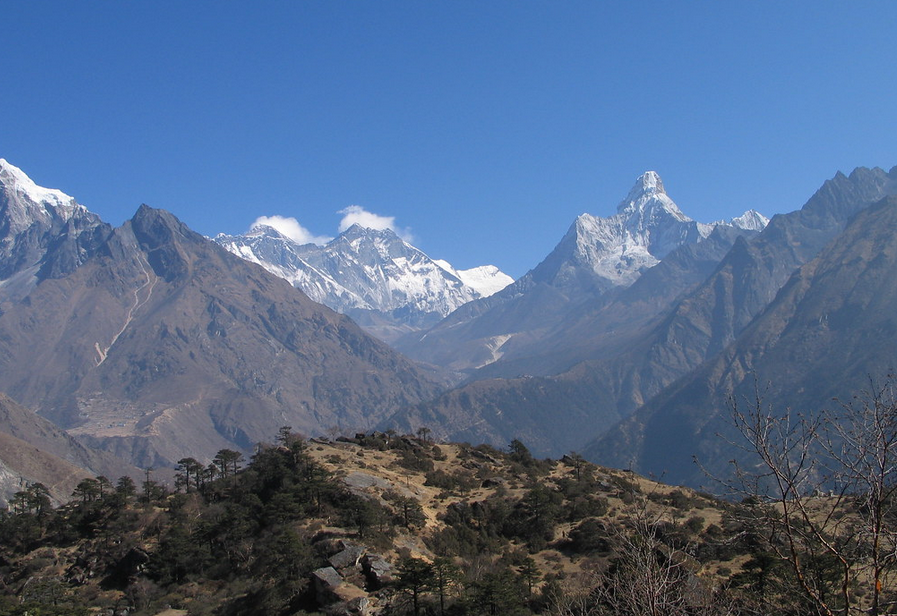
One of the best things about March is the visibility. The mountain scenery is generally fantastic, and the skies are often clear and bright. It is also an excellent season to capture photos since the snow-covered mountain ranges and the springing trees give spectacular scenes.
April: One of the Best Months to Trek
April is generally regarded as one of the best months of the year in which one can trek to Everest Base Camp. The climate is mostly predictable, the temperatures are agreeable, and the skies are mostly clear. Rhododendron flowers also grow at lower altitudes, and they are scattered all over the hiking paths, which make them colorful. During the day, the weather is good to walk around, and at night, it is cold but bearable.
Due to the fantastic weather conditions, April is among the busiest months in the Everest region. The tea houses, lodges, and trails may get congested, particularly at the tourist attraction sites such as Namche Bazaar and Tengboche.
Nevertheless, the weather and the spectacular views are amazing and make April worth considering by most trekkers.
May: Busy Days and Warm Days
Another popular month is May as the temperatures are still increasing, particularly at lower altitudes. Weather conditions are quite stable in the first half of the month, and the mountain landscape is again spectacular. Warmer mornings and evenings are typical for trekkers compared to the previous spring months.
Nevertheless, late in May, the clouds and rare rain showers may begin to appear as the monsoon season ends up near. In the afternoons, visibility can be less certain, and the trails may be crowded with trekkers and climbers who are training to go to Everest. Despite this, May is still one of the best months to visit Everest Base Camp.
June: Monsoon Season Begins
- The monsoon season in Nepal usually begins in mid-June, peaks in July, and gradually withdraws by late August, ending in early September.
- It starts to rain more at lower altitudes, and clouds start to cover the mountains more frequently.
- The trails are prone to muddy and slippery conditions, especially the ones in the forests below Namche Bazaar.
- Flights to Lukla are often delayed, mainly due to poor visibility caused by clouds, fog, or strong winds rather than rain itself. This is common during both monsoon and winter mornings.
- Although the Everest region receives less rainfall than lower areas of Nepal, trekking conditions become less predictable.
- The positive thing is that it greenness and beautifies the scenery.
- The number of trekkers on the trail is also much lower, thus the experience is less noisy and peaceful.
July: Rainy and Cloudy
- The month of July is one of the rainy months in the Everest region.
- The rain is usually heavy at lower altitudes, with higher altitudes staying cloudy most of the day.
- The mountain views may be restricted as the clouds cover the mountains.
- Roads are made slippery, and the chances of landslides or transportation delays are increased.
- It is not regarded as a perfect month to trek to Everest Base Camp.
Nevertheless, there are still travelers who prefer July as they like to be alone and will not mind rain and unstable weather conditions. - It is a very different season to the dry seasons, especially as the forests and hills are especially lush.
August: Monsoon Season is Over
- August is still in the monsoon season, but the situation gradually starts to change towards the end of the month.
- Rain is usual, particularly in the afternoons and evenings.
- The trails may remain muddy, and clouds may still be hiding mountain views.
- Nevertheless, as months pass and the region receives rain, the Everest region begins to get fresher and greener.
- Late August might also be interesting to visit because it may be less crowded and does not need to rain all the time.
- Towards the end of the month, the autumn is likely to be felt.
September: Autumn Season Begins
- The trekking conditions start to improve in September.
- The monsoon rain slowly disappears, the skies are cleared, and the mountains are more visible.
- The roads are new following the rainy season, and the atmosphere is usually clean and clear.
- The weather is pleasant, particularly during the daytime.
- The autumn trekking season kicks off in September and is regarded as one of the best seasons of the year to visit Everest Base Camp.
- Towards the end of the month, an increased number of trekkers come, and the trails are crowded.
October: October is the Best Month to Everest Base Camp
- The month of October is usually regarded as the best month ever to hike to the base camp of Everest.
- The climate is predictable, the skies are clear, and the mountain scenery is breathtaking.
Temperatures are very comfortable during the daytime, and long hours of trekking become much more comfortable. - Even at night, it may be cold, particularly at the higher altitudes, but the conditions are generally very good.
- The month of October is also a busy month in the region.
- The tea houses, lodges, and flights may be booked up early.
The ideal weather makes October worth the crowds for many trekkers.
November: Cooler Temperatures and Clear Skies
- Another month that is great for trekking is November.
- The weather is generally more stable and clearer compared to other months, but sudden changes, afternoon clouds, and temperature drops at altitude are still common.
- The trails are a little less frequented when the season of peak autumn begins to end.
- This makes November an excellent choice for a month to go to the mountains when the not-so-busy crowds are on vacation, and the mountains are not covered by clouds.
- The air is crisp, and the snow-covered mountains appear especially striking against deep blue skies.
December: Winter Beauty and Quiet Trails
- The winter season in the Everest area starts in December.
- Temperatures begin to decrease very fast, particularly at high altitudes.
- This month has fewer visitors on the trails, making it quieter.
- Snowy scenery can be beautiful, especially later in December, although snowfall is not guaranteed everywhere, and early December may still remain relatively dry.
But nights are very cold, and it is more likely that there will be some snow later in the month. - The trekkers who opt to go during the month of December must be equipped with the right winter attire and equipment.
- December offers a beautiful and calm trekking experience to those who are able to manage the cold.
Effects of Altitude on the Weather
The first thing that you have to know about the Everest region is that the altitude is everything. On average, temperature drops by about 6.5°C per 1,000 meters of elevation gain.
The further up you go, the colder the temperatures. Although it might be warm in Lukla or Namche Bazaar, it can even be freezing when you arrive at Lobuche or Gorak Shep.
There are also more elevated winds, colder nights, and unpredictable weather patterns in higher elevations.
This is the reason why trekkers require numerous layers of clothes. You can begin the morning in a heavy jacket, take it off in the sunny afternoon, and then need it again when the sun sets. The feeling of your body also depends on the altitude. Low temperatures and lighter air may cause trekking to be more exhausting, particularly at lofty levels. This is why it is no less significant than the weather forecast verification to acclimatize properly.
Sunrise and Sunset Conditions
- The weather in Everest is subject to change during the day.
- The best time would be mornings, particularly in spring and fall.
- Trekkers can get up early since the sunrise over the Himalayas can be simply splendid.
Everest, Ama Dablam, and Lhotse mountains are shimmering in golden light with the rising of the sun. - Winter has shorter trekking days with later sunrises and earlier sunsets, while autumn offers the most consistent and stable light conditions for trekking and photography.
- At afternoon, clouds may begin to form about the peaks, particularly in warmer weather.
- This is among the reasons why most trekkers like to set out the door early in the morning.
- The weather conditions are usually more predictable, the temperatures are lower, and the mountain scenery is typically significantly improved.
- Even sunsets are pretty, though the temperature drops rapidly when the sun goes down.
When the sun sets behind the mountains, the cold is much more conspicuous.
Packing for Different Seasons
The type of packing list you should have is dependent on the season you are visiting.
In winter seasons such as December, January, and February, you must have heavy down jackets, thermal clothes, insulated gloves, thick socks, and warm hats. Waterproof boots and an extra layer are highly essential, as snow is common at higher elevations.
During spring and autumn, you can work in lighter layers during the day and in the evenings, you need warm clothes. Most trekkers will be comfortable with a fleece jacket, down jacket, rain jacket, gloves, and thermal base layers. Waterproof clothing is needed during the monsoon season. Raincoats, backpack covers, waterproof boots, and quick-drying clothes can be of great help. Whichever month you go on vacation in, it is always good to be ready in case of sudden weather changes.
Crowds and Weather
The season you decide to go will not only impact the weather but the ambiance on the trail.
The busiest seasons are spring and autumn, so the tea houses are busy, and the trekkers are all international. You can get acquainted with international people, exchange stories in dining halls, and have a social atmosphere.
On the other hand, winter and monsoon months are much quieter. Other tourists like the quietness of vacant roads and fewer tea houses.
Others might like the vitality and energy of the peak trekking season. And there is no good or bad decision. All depends on the kind of experience that you desire.
Everest Base Camp Trekking Time
Despite the charisma of each month, spring and autumn are the most desired ones.
The season of spring, from March to May, has the flowers in bloom, temperatures are warmer, and the mountain views are great. The months of autumn, between September and November, offer clear weather, stable conditions, and the best trekking conditions.
Trekking in winter is the best season when the trails are quiet, and the temperatures do not bother the trekkers. The monsoon season is the time to visit for adventurous travelers, as it offers more solitude and beautiful scenery, but with more challenges of weather conditions.
How to Deal with the Everest Weather
Regardless of the month you opt for, weather in the Everest region is subject to change in a short time. In the morning it can be a sunny day, but later in the afternoon, it may turn cloudy, and after the sun sets, the temperatures may fall drastically.
This is the reason why it is so important to layer clothes. Warm jackets, waterproof garments, gloves, hats, and durable trekking boots should always be packed by trekkers. You should also leave some additional days in your itinerary since Lukla flights are usually postponed due to weather. Flexibility can help to make the whole process less stressful.
Conclusion
Everest Base Camp has extreme weather depending on the time of the year, and each season presents a unique experience.
Certain months are hot and clear with good mountain views, while other months may have deserted trails, snowy mountains, or green woody hills.
The best seasons to visit the trek are spring and autumn due to their consistent weather conditions and picturesque views for most trekkers. But there is no month that is perfect for everybody. The best time is based on what type of experience you desire.
Winter can be the perfect season if you do not want crowds. Spring is a good option if you love colorful landscapes. Autumn is tough to beat if you desire the clearest skies.
No matter when you go, trekking to Everest Base Camp is an unforgettable adventure. The most amazing thing about traveling is that with the proper preparation and weather awareness, you can have one of the most amazing experiences in the world.
Get detail: https://www.exploreinnepal.com/everest-base-camp-trek-14-days/


 By
By