
Substantial shifts in tenant expectations have transformed what landlords and property managers must deliver from a building’s network. Tenants now demand reliable, fast, and secure connectivity for work, entertainment, building controls, and emerging Internet of Things devices. A holistic approach to network design that considers infrastructure, operations, tenant experience, and future expansion becomes essential for retaining occupants and driving property value. This article explains practical strategies and architectural choices that deliver resilient, scalable, and tenant-friendly network solutions.
Aligning design with tenant use cases
Successful network optimization begins by understanding how tenants will use the service. Commercial tenants often need predictable, symmetric bandwidth and robust VPN support for remote offices. Residential tenants expect seamless Wi-Fi throughout living spaces and guest areas, with streaming and gaming requiring low latency. Mixed-use properties require segmentation so office traffic does not interfere with residential devices or building automation. A tenant-first discovery process—surveying likely concurrent device counts, peak-hour behavior, and specific application requirements—lets designers size bandwidth, plan access points, and specify switching capacity to match realistic loads instead of guesswork.
See also: The Importance of Lifeguard Training for Young Recruits
Core infrastructure and physical planning
Physical infrastructure decisions determine long-term performance and upgrade flexibility. Fiber-to-the-building should be the baseline whenever feasible, terminating in a well-provisioned telecom room with redundant entry points and clear conduit paths for future carriers. Structured cabling with Cat6A or fiber risers supports higher speeds and PoE applications. Strategically placed telecom closets and open conduit between floors reduce future disruption when capacity needs grow. Power redundancy for critical network equipment and attention to cooling in comms spaces prevent downtime. These foundational choices reduce retrofit costs and ensure the network can evolve as tenant demands increase.
Wireless architecture and indoor coverage
Wi-Fi remains the primary access method for many tenants, so indoor wireless architecture must prioritize coverage, capacity, and manageability. Adopt modern Wi-Fi 6 or Wi-Fi 6E access points in high-density areas to benefit from improved spectral efficiency and client handling. Use heat mapping and site surveys to place APs where throughput and signal quality meet tenant expectations rather than relying on one-size-fits-all placement. Mesh solutions can fill gaps in complex layouts, but avoid over-reliance on mesh backhaul where wired connectivity would offer more predictable performance. Centralized controllers and cloud-managed platforms simplify firmware updates, monitoring, and scaling across multiple properties.
Security, privacy, and network segmentation
Security is non-negotiable for modern tenants. Deploy VLAN segmentation and software-defined networking to separate tenant traffic, guest access, and building systems such as HVAC and security cameras. Implement role-based access control for administrative systems and enforce strong authentication methods for tenant network access. Use network access control (NAC) to identify and quarantine unmanaged or suspicious devices. Regular vulnerability scans, a patch management strategy, and encrypted tunnels for remote administration reduce exposure. Transparent privacy policies and clear communication about data handling reassure tenants and support compliance with local regulations.
Operations, service models, and SLAs
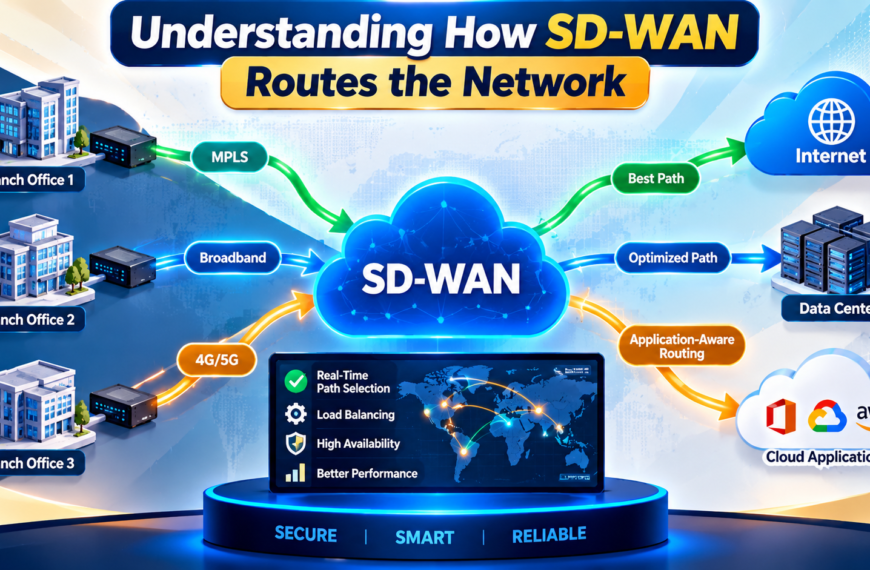
Operational excellence determines whether an installed network becomes a value-add or a source of complaints. Managed services models can offload monitoring, troubleshooting, and routine maintenance to specialists who operate 24/7. Define service-level agreements that specify uptime expectations, mean time to repair, and escalation procedures. Offer flexible tenant options: a basic communal network for common areas and paid dedicated circuits or managed private networks for tenants with higher needs. Billing models that apportion costs fairly and transparently, such as metered bandwidth or tiered service levels, align incentives and enable predictable budgeting for both landlords and tenants.
Enabling IoT and smart building services
Integrating IoT platforms requires careful planning to avoid overloading tenant networks while unlocking operational benefits. Provide a separate, protected network path for sensors, access controls, energy meters, and environmental monitors. Edge computing nodes can locally process telemetry for building automation without sending all data to the cloud, reducing latency and bandwidth usage. Standardize on interoperable protocols and APIs so new systems can be added without lengthy integration projects. The ability to track energy, occupancy, and predictive maintenance across the property delivers measurable operational savings and improves tenant comfort.
Futureproofing and scalability
Futureproof networks by designing for modular upgrades and capacity headroom. Choose switching and routing platforms that support modular line cards or licensing upgrades so you can add bandwidth without wholesale replacement. Reserve space and conduit for additional fiber and plan for growing power and cooling needs in telecommunications rooms. Maintain relationships with multiple carriers to avoid single points of failure and negotiate diverse entry paths. Regularly review usage analytics to forecast when incremental upgrades will be needed, allowing capital planning rather than reactive emergency investments.
Putting it together for competitive advantage
Delivering a superior tenant experience depends on integrating architecture, operations, and tenant services into a cohesive offering. Standardizing on high-quality cabling and fiber backbone, pairing it with a modern wireless fabric and robust security segmentation, creates a resilient foundation. Coupling that with managed operations, flexible tenant service tiers, and IoT-ready infrastructure turns connectivity from a utility into a competitive differentiator that supports retention and higher rental yields. Property owners who proactively invest in network quality position their assets to meet evolving tenant expectations and to respond quickly to new technology trends while minimizing disruption.
By treating network design as a core element of property strategy rather than an afterthought, property managers can create buildings that are more attractive, efficient, and profitable. Practical planning and disciplined execution ensure that investments pay off in both immediate tenant satisfaction and longer-term operational savings, making connectivity a strategic asset for the portfolio. Prioritizing for property connectivity across planning, deployment, and operations will ensure networks meet demands now and remain adaptable for what comes next.


 By
By