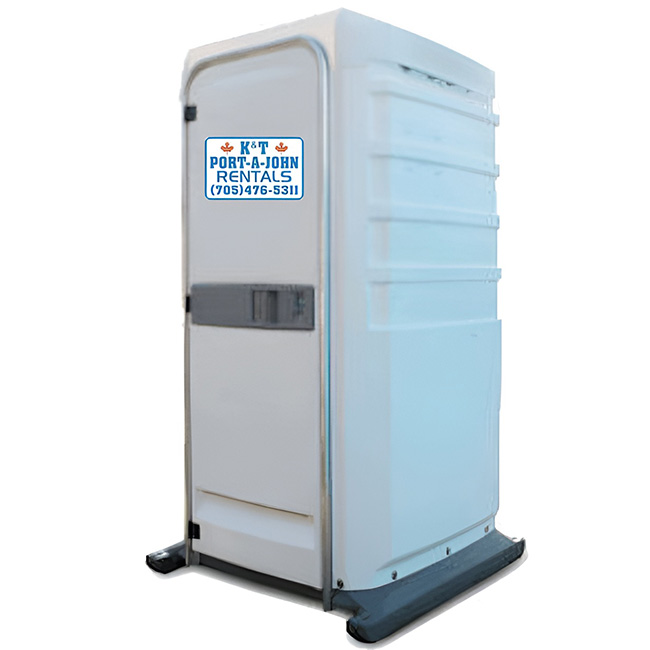

From late March to early May in much of Northern Ontario, solid ground becomes something like pudding. Frost leaves the ground from above, and beneath the soil, ice still sits there with no place for meltwater to flow away. Portable toilet rentals hired in that period face conditions that didn’t exist through February and won’t exist in June. Empty, it weighs around 90–100kg, depending on the model. That number increases quickly as the holding tank fills, and soft ground needs attention to the prevailing conditions.
Most problems on placement day in spring stem from one decision. Someone chose a position that seemed perfectly fine at the time. Two weeks later, the portable toilet rental has tipped, a service truck can’t reach it, and the door is sticking because the frame has racked just enough out of square. None of that is dramatic, and most of the time it is avoidable with some premeditated thought before that unit ever leaves the truck.
Why Autumn Frost Creates Uncertain Soft Soil for the Spring Thaw
In winter months, the frost depth often reaches a metre or more in North Bay. Natural Resources Canada tracks this seasonal frost behaviour across Canada, and the same basic pattern holds year after year. That thaw does not take place uniformly. South-facing slopes soften first. Elsewhere around tree lines, shaded areas can remain frozen for up to weeks longer.
But that inconsistent thaw is the real bogeyman. One corner of a unit can sit on solid frozen soil, while the opposite corner gradually sinks into wet, saturated clay. The tilting occurs very gradually, so no one notices until the refuse level looks off or the door swings by itself.
The biggest mistake is assuming that everything looks the way it appears on the surface. This involves assessing the ground conditions to decide exactly where to position porta potties.
If you are looking to book the delivery, try walking the intended spot before doing so. A few minutes of cross-checking is better than a call while moving later on.
Things worth testing:
- Stick a shovel or a piece of rebar into the ground. If it goes in with little resistance past 15 centimetres, the ground is unreliable.
- Look for pools of water within a distance of three metres. Surface water means the water table is not far below ground level.
- Look for ruts from previous cars’ tires. Ground that already failed once is marked out with ruts.
- Note the slope. Any grade steeper than a gentle slope will cause meltwater to flow directly under the unit.
- Existing parking areas and compacted laneways on gravel pads handle spring conditions much better than bare soil or lawn. Asphalt works well, although it can leave marks when you put units down on freshly thawed asphalt in warm weather.
See also: The Importance of Lifeguard Training for Young Recruits
A Foundation Which Holds Through Mud Season
A base is the pragmatic answer when firm ground alone isn’t an option. The point is to distribute the load over a larger area so the unit does not concentrate its weight on four tiny points of contact.
Options that hold up:
- Two sheets of plywood at least 19 millimetres thick next to each other. When thinner sheets of paper absorb water, they begin to warp.
- Heavy duty ground mats rated for equipment traffic
- Crushed stone approximately 100–150 millimetres thick before you use it.
- Wood pallets can work but will rot and can widen with an uneven load.
- Extend the base at least 30 cm past the footprint on all sides. Users exit the unit to that edge, and a piece of plywood sized to fit perfectly becomes a tripping hazard as surrounding soil subsides.
Routes for Service Trucks to Access During Thaw
Spring is the worst month for heavy vehicles driving on soft surfaces, and vacuum trucks can be quite large.
Most municipalities in Ontario restrict loads on other roads during the thaw period, which generally runs from early March through May. Others are called half-load designations, and are designed by the Ontario Ministry of Transportation, in accordance with the Highway Traffic Act, which dictate what routes service vehicles can legally use. Before adding a delivery site, make sure it’s located along an accessible route.
Timing Deliveries Around the Thaw
Early morning deliveries use this overnight refreezing to their advantage. Dirt that will not bear a truck at 14:00 hours might well hold one up at 07:00. This is a trick that construction crews have been employing for decades.
If the event is in April or May, does the site allow access two days before and two days after? Spring weather can turn on a dime, and the route that you think is a no-brainer on Thursday may be the wrong one by Saturday.
So, look before you leap, build a base if there is any uncertainty, keep service access on firm ground, and time it for when the soil is closest to its best. These four decisions address almost all spring placement issues before they happen.


 By
By