
A crying baby at the edge of a pool is one of the most common reasons parents delay swim lessons for another few months, then another few after that. It feels like a sign the baby just isn’t ready yet, but most of the time it has nothing to do with readiness and everything to do with how the introduction happened. Baby swim lessons work best when comfort comes before anything else, not as an afterthought once the “real” lessons begin.
Babies don’t come into the water with any built-in fear of it. That fear, when it shows up, is almost always learned in the first few minutes of a bad first experience, and it can just as easily be prevented with a slower, calmer approach from the very start.
Why Babies React the Way They Do
A baby’s reaction to water is really a reaction to sudden change. Cold temperature, unfamiliar sensation on the skin, a parent’s nervous grip, or an instructor moving too fast can all trigger the same startled crying, even though none of those things are actually dangerous.
This is why two babies of the same age can have completely different first experiences depending purely on pacing. One eased in gradually with a calm parent tends to relax within a few minutes. One dunked in quickly or handled by a tense adult often cries immediately, and that first negative association can linger for weeks if it isn’t addressed carefully afterward.
Babies also pick up on parental anxiety more than people expect. If a parent is gripping tightly, holding their breath, or rushing through the process, the baby absorbs that tension almost instantly. Calm rarely comes from words at this age. It comes from body language and touch, and babies are remarkably good at reading both, often before they can even sit up on their own.
Water Temperature Matters More Than People Think
Adults tolerate a wide range of pool temperatures without much complaint. Babies do not. A pool that feels perfectly fine to a grown adult can feel genuinely cold to an infant, especially given how much faster babies lose body heat compared to adults.
Warmer water, generally in the range most baby-specific programs are designed around, keeps babies noticeably calmer and more willing to engage instead of shivering and fussing within the first few minutes. This single factor explains a huge portion of the difference between a baby who enjoys the pool and one who cries through the entire session.
If a baby seems distressed almost immediately upon entering the water, checking the temperature first is usually more useful than assuming the baby simply dislikes swimming.
Slow, Predictable Movement Builds Trust Fast
Babies respond well to repetition and predictability, and water introduction works the same way. Sudden movements, unexpected splashes, or quick submersions without warning tend to spike anxiety, even in babies who were previously calm.
A slower approach, where the same simple movements get repeated gently across multiple sessions, gives a baby’s nervous system time to recognize the pattern as safe. This is part of why consistency across weekly lessons matters so much more than intensity in any single session.
Some schools swimming programs push toward underwater submersion too early, before a baby has built any real comfort floating and being held in the water. That approach sometimes works short term but often creates more resistance over time, since the baby never gets the chance to build a calm baseline before being pushed further.
See also: Business Strategies for Competitive Markets
The Parent’s Role Is Bigger Than Most People Realize
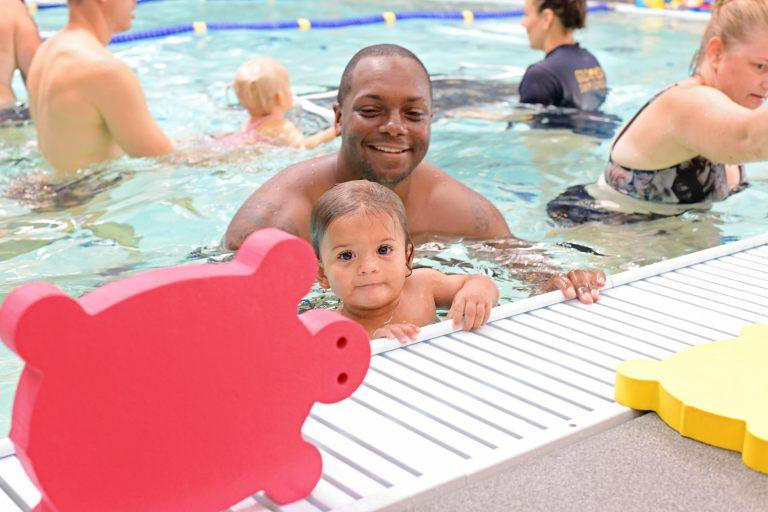
In baby swim classes, the parent isn’t just a supporting presence. They’re often the single biggest factor in how the baby responds. A parent who stays relaxed, keeps a soft and steady voice, and avoids anxious over-correction tends to have a baby who settles faster than one whose parent is visibly nervous the entire time.
This doesn’t mean parents need to fake confidence they don’t feel. Babies notice inconsistency between tone and body language just as easily as outright tension. The more effective approach is usually just slowing everything down, taking a breath before entering the water, and letting the baby set some of the pace rather than rushing through a checklist of skills.
Physical contact matters here too. Holding a baby securely but not stiffly, close to the body rather than at arm’s length, tends to communicate safety far more effectively than words ever could at this age.
What a Good First Session Actually Looks Like
A strong first session usually has very little to do with actual swimming skills. It’s mostly about the baby existing calmly in the water, getting used to the feeling of it against their skin, and associating the pool with a parent’s calm presence rather than stress.
Simple games, gentle bouncing, quiet singing, and slow movement through the water tend to work far better in a first session than any structured skill work. Skills come later, once comfort is already established as a baseline.
Swimming lessons for babies that skip this step and jump straight into structured skill drills often end up fighting an uphill battle later, since the baby associates the pool with discomfort before any actual learning has had the chance to happen.
Signs Comfort Is Actually Building
Progress at this age looks different than most parents expect. It’s rarely a dramatic moment where a baby suddenly loves the pool. It’s smaller signs, like reduced crying at the start of a session, more relaxed body posture in the water, or a baby reaching toward the water instead of pulling away from it.
If a baby is still showing significant distress after several sessions with no improvement, that usually means something in the approach needs adjusting, whether that’s pacing, temperature, or the parent’s own comfort level in the water. Every baby settles differently, so connect with us and describe what you’re seeing. Talking through the specifics with someone experienced often uncovers a small fix that makes a real difference, rather than requiring a full restart.
Comfort Now Pays Off Later
A baby who builds genuine comfort in the water early tends to move through actual swim skills far more easily later on, simply because there’s no underlying fear to work around first. Skills are relatively easy to teach. Undoing an early negative association takes much longer.
None of this requires rushing, and slower almost always beats faster when it comes to how babies actually respond to new experiences. A calm, patient introduction now tends to save a lot of frustration for both parent and child down the road.

 By
By