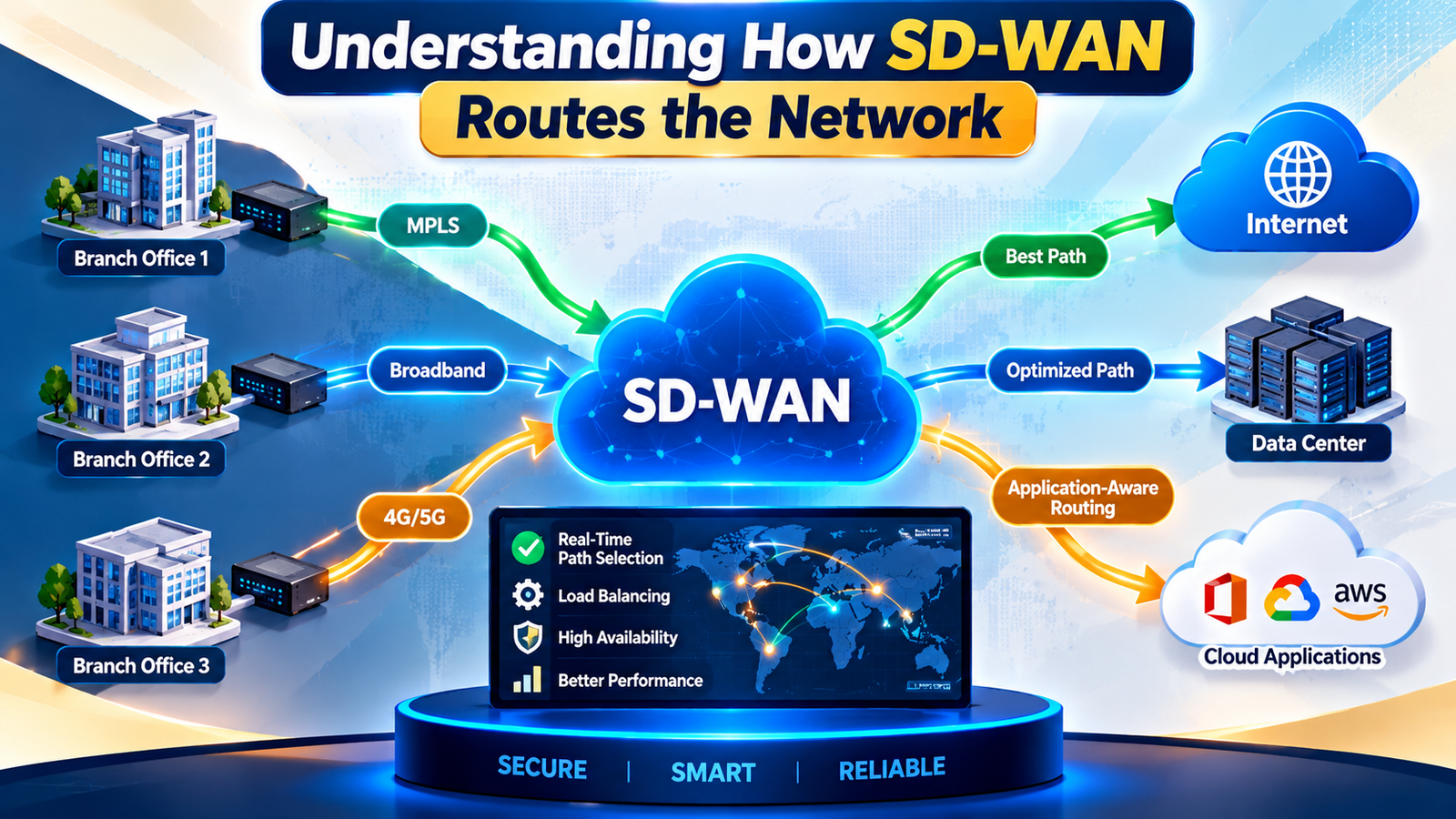

Explore how software-defined networks manage traffic efficiently, improve security, and support modern business needs with intelligent routing.
Introduction to Software-Defined Networks
Software-defined networking (SDN) is a modern approach to network management. It separates the control plane, which determines where traffic should go, from the data plane, which actually forwards the packets. This separation enables more centralized control, making it easier to manage complex networks and respond to changing requirements.
SDN emerged as an answer to the limitations of traditional networks, which often depend heavily on manual configuration and can be slow to adapt. With SDN, network administrators can programmatically control network behavior, automate routine processes, and introduce new policies more efficiently. This flexibility is particularly valuable as businesses expand their use of cloud computing, mobile devices, and Internet of Things (IoT) technologies.
Core Concepts of SDN
Traffic management in SDN involves monitoring, directing, and optimizing data flow across the network. Centralized controllers make routing decisions based on current network conditions, organizational policies, and application requirements. This helps ensure that critical applications receive the bandwidth and performance they need while less important traffic is handled efficiently. For a deeper understanding of how does SD-WAN work routing traffic.
Unlike traditional networks, where individual devices often make independent routing decisions, SDN controllers maintain a broader view of network activity. They can use this visibility to balance traffic loads, avoid congested paths, and reroute traffic when conditions change. This centralized intelligence supports more precise traffic management, which is increasingly important for businesses that depend on high availability and reliable application performance.
Centralized Control and Its Benefits
Centralized controllers in SDN collect information from network devices and use it to understand conditions across the environment. This allows administrators to make more informed decisions about traffic routing and respond more quickly to congestion, outages, or changing application demands. According to the National Institute of Standards and Technology, consistent and well-managed security controls are also important when protecting modern technology environments.
Centralized control also makes it easier to apply consistent policies across different locations and devices. For example, an organization can establish common security and traffic rules for multiple branch offices from a central management point. This can reduce configuration errors and simplify policy administration. Centralized visibility can also make troubleshooting more efficient because administrators have a clearer view of network conditions from one location.
Traffic Engineering and Quality of Service
Traffic engineering is the process of directing data flows to achieve specific goals, such as reducing latency, preventing congestion, or maintaining application performance. Quality of Service (QoS) policies assign different priorities to different types of network traffic. For example, voice or video calls may receive higher priority than routine file downloads so that real-time communication remains responsive.
Using traffic engineering, SDN controllers can distribute network resources more efficiently. They can detect potential bottlenecks and redirect traffic before congestion begins to affect users. QoS is particularly important for organizations that rely on real-time services such as voice over IP and video conferencing. SDN also makes it easier to adjust these policies as application priorities and business requirements change.
Application-Aware Routing in SDN
SDN can identify the type of application generating traffic and make routing decisions accordingly. This approach, often called application-aware routing, allows organizations to prioritize important business applications while sending less critical traffic over alternative paths. The goal is to use available network resources more intelligently while maintaining reliable service for essential workloads.
Application-aware routing is especially useful in environments supporting many different types of traffic. For example, a hospital may prioritize medical imaging or patient information over guest Wi-Fi activity. SDN provides greater control over how these workloads are handled, allowing resources to be directed toward services that have higher operational importance. This can improve performance while supporting broader business and compliance requirements.
Security and Policy Enforcement
SDN can simplify the enforcement of network security policies. Administrators can establish rules that restrict suspicious activity, control access to sensitive resources, or change how traffic is routed when certain conditions are detected. Because policies can be managed centrally, security changes can be applied across multiple parts of the network more quickly.
Security policies can also be updated as threats and business requirements evolve. For example, administrators may restrict particular types of traffic or isolate affected network segments when suspicious behavior is detected. This ability to adapt policies quickly is valuable in a constantly changing threat environment. According to the Cybersecurity & Infrastructure Security Agency, adaptable security practices and timely responses are important parts of protecting modern networks.
Integration with Cloud and Hybrid Environments
As organizations move more workloads into cloud environments, SDN plays an important role in connecting on-premises and cloud-based resources. SDN controllers can help manage traffic between private data centers and public cloud services while maintaining consistent policies for performance and security. This supports hybrid cloud models in which applications and data are distributed across several environments.
SDN can also simplify management of virtual networks inside cloud platforms. Administrators can apply similar traffic policies across physical and virtual resources, helping maintain greater consistency and visibility. This is particularly useful for organizations that need to scale quickly, support multiple regions, or regularly move workloads between different environments.
SDN and Network Automation
Network automation is another important benefit of SDN. Through programmable interfaces, administrators can automate routine tasks such as provisioning devices, updating policies, or responding to common network events. Automation reduces repetitive manual work and can lower the risk of configuration errors.
For example, when a new branch office is opened, network settings can be applied using predefined configurations and policies. This helps ensure that security and performance requirements remain consistent without requiring administrators to configure every device individually. Automation can also speed up software updates and emergency changes because policies can be distributed across the environment from a central point.
Challenges in SDN Management
Although SDN offers significant benefits, it also introduces management challenges. Centralized control can create operational risk if controller infrastructure is not designed with appropriate redundancy. Managing large numbers of policies can also become complicated as the network expands. Organizations therefore need to plan for resilience, maintain controller software, and regularly review configurations.
Scalability is another important consideration, particularly for enterprises operating thousands of devices. As network size and traffic volumes increase, controllers need sufficient capacity to process information and make routing decisions efficiently. Redundant systems, appropriate infrastructure, and careful architecture can help manage these demands. Staff training is equally important because SDN requires different operational skills from traditional network management.
Future Trends in SDN Management
As networks become more complex, SDN is expected to become increasingly intelligent. Artificial intelligence and machine learning can be used to analyze traffic patterns, identify changing conditions, and support automated routing decisions. These capabilities may help networks become more efficient and resilient while supporting cloud computing, IoT deployments, and distributed work environments.
Emerging standards and open-source projects are also making software-defined networking more accessible. Improved interoperability can make it easier to integrate technologies across different platforms and environments. As automation and intelligent network management continue to develop, SDN is likely to remain an important part of broader digital transformation strategies.
Conclusion
Traffic management in software-defined networks is changing how organizations approach data flow, security, and network reliability. Through centralized control, application-aware routing, automation, and flexible policies, SDN can help networks respond more effectively to changing business requirements. As technologies continue to evolve, software-defined approaches will remain important for building efficient, adaptable, and secure network environments.
FAQ
What is the main advantage of SDN traffic management?
The main advantage is centralized control, which can simplify network management, improve traffic visibility, and support faster responses to changing conditions.
How does SDN improve network security?
SDN supports centralized policy management and faster security changes, helping administrators restrict suspicious activity and apply consistent controls across the network.
Can SDN work with existing network infrastructure?
Yes, SDN can often be introduced alongside existing network hardware, allowing organizations to adopt software-defined capabilities gradually.


 By
By